Electric scooters have rapidly become one of the most popular personal mobility solutions in India. Rising fuel prices, increasing environmental awareness, lower maintenance requirements, and advancements in battery technology have encouraged more people to switch from conventional petrol-powered two-wheelers to electric alternatives.
However, one question remains at the top of every buyer’s mind:
“How much does an electric scooter actually cost to run per kilometer?”
Understanding the running cost is essential because it directly affects long-term savings and overall ownership expenses. While the purchase price of an electric scooter may sometimes be higher than a petrol scooter, the daily operating cost is often significantly lower.
In this article, we’ll break down the factors that influence electric scooter running costs, compare them with petrol scooters, and help you understand why electric mobility is becoming an increasingly cost-effective transportation option.
What Is Running Cost Per Kilometer?
Running cost per kilometer refers to the amount of money spent to travel one kilometer using a vehicle.
For electric scooters, this mainly includes:
- Electricity consumption
- Battery charging expenses
- Battery replacement consideration
- Maintenance costs
Unlike petrol vehicles, electric scooters do not require fuel, engine oil changes, clutch maintenance, or several other recurring expenses.
As a result, the cost of operating an electric scooter is generally much lower.
How Electric Scooters Consume Energy
Electric scooters use rechargeable batteries to power an electric motor.
When you charge the battery, electrical energy is stored and later converted into motion.
The total running cost depends on:
- Battery capacity
- Electricity tariff
- Charging efficiency
- Riding conditions
- Vehicle weight
- Riding style
The more efficiently energy is used, the lower the running cost per kilometer.
Understanding Battery Capacity
Battery capacity is usually measured in kilowatt-hours (kWh).
Most modern electric scooters come with batteries ranging from:
- 2 kWh
- 3 kWh
- 4 kWh
- 5 kWh
Generally, larger batteries provide greater riding range.
For example:
| Battery Capacity | Approximate Range |
| 2 kWh | 60-80 km |
| 3 kWh | 90-120 km |
| 4 kWh | 120-160 km |
| 5 kWh | 150-200 km |
Actual performance varies depending on riding conditions and vehicle efficiency.
How to Calculate Electric Scooter Running Cost
The basic formula is:
Running Cost Per Kilometer = Charging Cost ÷ Riding Range
Let’s understand with an example.
Suppose:
- Battery Capacity = 3 kWh
- Electricity Rate = ₹8 per unit
- Full Charge Cost = ₹24
- Range Per Charge = 120 km
Calculation:
₹24 ÷ 120 km = ₹0.20 per km
This means the scooter costs approximately 20 paise per kilometer to operate.
Even if electricity rates vary, electric scooters generally remain extremely economical compared to petrol vehicles.
Factors That Affect Running Cost
Electricity Tariff
Electricity prices differ across states and locations.
Higher electricity rates may slightly increase charging expenses, but operating costs remain comparatively low.
Battery Efficiency
A healthy battery delivers better performance and range.
Poor battery condition can increase energy consumption and reduce efficiency.
Riding Style
Aggressive acceleration and high-speed riding consume more energy.
Smooth riding helps maximize battery range and reduce operating costs.
Load Capacity
Carrying additional weight requires more power, affecting overall efficiency.
Road Conditions
Hilly terrain, rough roads, and heavy traffic can reduce battery range and increase energy consumption.
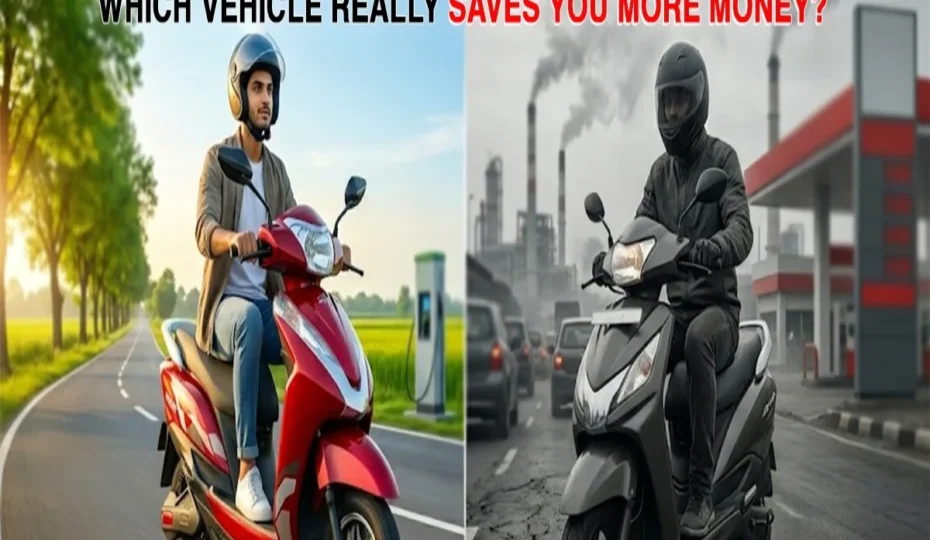
Electric Scooter vs Petrol Scooter Running Cost
One of the biggest reasons people choose electric scooters is long-term savings.
Let’s compare.
| Parameter | Electric Scooter | Petrol Scooter |
| Energy Source | Electricity | Petrol |
| Average Cost Per Km | ₹0.15 – ₹0.40 | ₹2.00 – ₹3.50 |
| Engine Oil | Not Required | Required |
| Maintenance | Low | Moderate |
| Noise | Minimal | Higher |
| Emissions | Zero Tailpipe Emissions | Fuel Emissions |
The difference becomes substantial when calculated over thousands of kilometers annually.
Monthly Savings with an Electric Scooter
Let’s assume a rider travels:
- 40 km daily
- 1,200 km monthly
Electric Scooter
Average running cost:
₹0.25 per km
Monthly cost:
₹300
Petrol Scooter
Average running cost:
₹2.50 per km
Monthly cost:
₹3,000
Monthly Savings
₹2,700
Annual Savings
₹32,400
These savings can significantly offset the initial purchase price over time.
Maintenance Costs: Another Major Advantage
Running cost is not limited to fuel or electricity alone.
Maintenance also plays a crucial role.
Electric scooters typically have:
- Fewer moving parts
- No engine oil
- No clutch
- No gearbox
- Reduced mechanical wear
This translates into:
- Lower servicing costs
- Fewer repairs
- Less downtime
Over several years, maintenance savings can be considerable.
Battery Replacement Cost: What Buyers Should Know
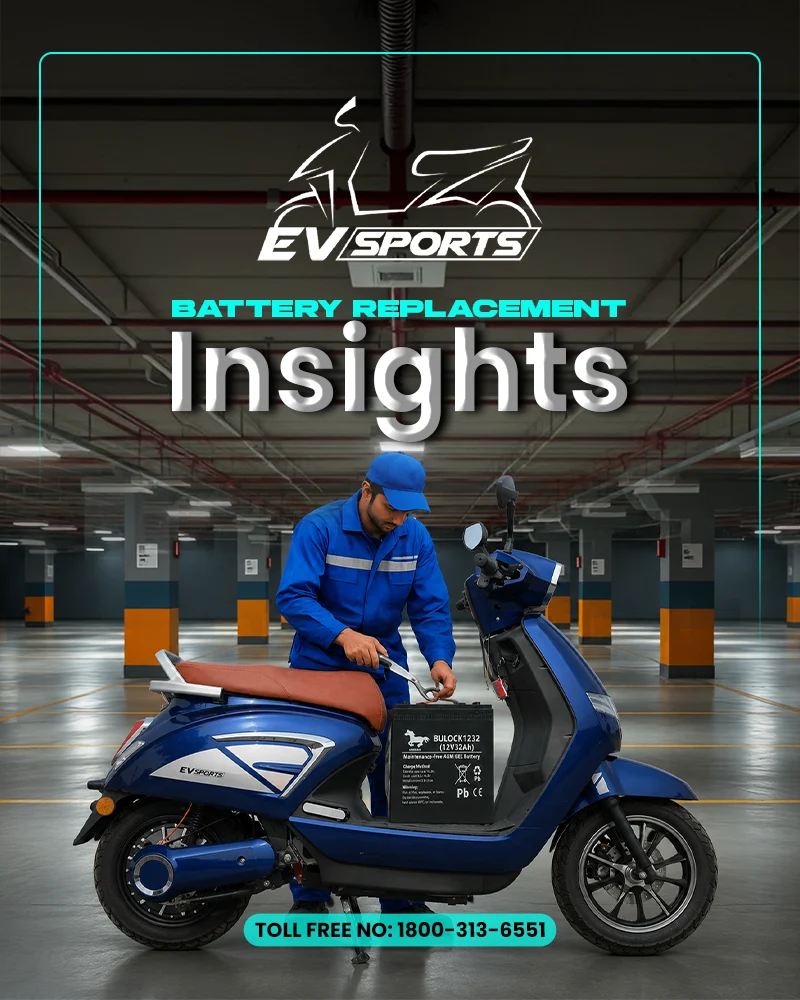
Many buyers worry about battery replacement expenses.
While batteries eventually need replacement, modern lithium-ion batteries are designed to provide thousands of charging cycles.
Factors affecting battery lifespan include:
- Charging habits
- Temperature conditions
- Usage frequency
- Battery quality
With proper care, a battery can provide several years of reliable performance before replacement becomes necessary.
Tips to Reduce Electric Scooter Running Cost
Maintain Proper Tire Pressure
Underinflated tires increase rolling resistance and energy consumption.
Avoid Aggressive Riding
Smooth acceleration improves efficiency and battery range.
Charge Correctly
Follow manufacturer recommendations to maximize battery life.
Reduce Unnecessary Load
Less weight improves energy efficiency.
Perform Regular Maintenance
Routine inspections ensure optimal performance and lower operating expenses.
Environmental Benefits Beyond Cost Savings
Apart from economic advantages, electric scooters contribute to a cleaner environment.
Benefits include:
- Reduced air pollution
- Lower carbon emissions
- Quieter urban transportation
- Reduced dependence on fossil fuels
As cities become more crowded, electric mobility is expected to play a major role in sustainable transportation.
Is an Electric Scooter Worth Buying?
For many riders, the answer is yes.
Electric scooters offer:
✔ Lower running costs
✔ Reduced maintenance expenses
✔ Convenient charging
✔ Smooth riding experience
✔ Eco-friendly transportation
✔ Long-term savings
For daily commuters, students, professionals, delivery riders, and urban travelers, electric scooters can provide excellent value over time.
Future of Electric Mobility in India
India’s electric vehicle market is growing rapidly.
Government initiatives, charging infrastructure development, improved battery technology, and rising fuel prices are accelerating EV adoption.
As technology continues to improve, electric scooters are expected to become even more efficient, affordable, and practical for everyday transportation.
Conclusion
The running cost per kilometer is one of the strongest advantages of owning an electric scooter. Compared to traditional petrol-powered vehicles, electric scooters offer significantly lower operating expenses, reduced maintenance costs, and substantial long-term savings.
While actual costs vary depending on battery size, electricity rates, riding habits, and road conditions, electric scooters consistently remain among the most economical transportation options available today.
If you’re looking for a smart, cost-effective, and environmentally friendly mobility solution, an electric scooter can be an excellent investment for both your wallet and the planet.