
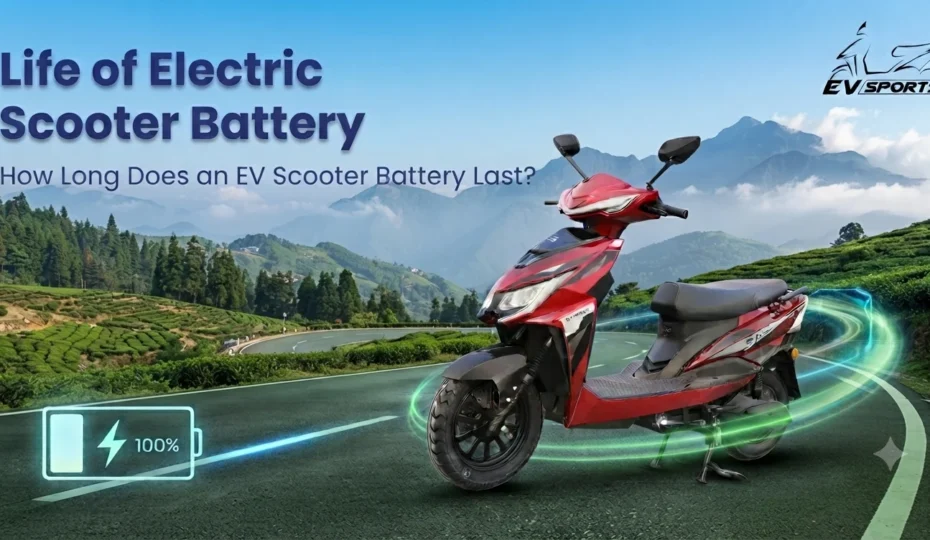
The battery is one of the most important parts of an electric scooter. When people think about switching from a petrol scooter to an electric one, one question often comes up: How long does an electric scooter battery last?
The answer depends on several factors, including the type of battery, charging habits, riding style, weather conditions, storage, and regular maintenance.
Let’s understand electric scooter battery life in simple terms.
How Many Years Does an Electric Scooter Battery Last?
Most modern electric scooters use lithium-ion batteries because they offer good energy density, performance, and rechargeability.
An electric scooter battery can generally last for several years, but its performance gradually decreases with age. Instead of measuring battery life only in years, manufacturers often use charging cycles.
One charging cycle roughly means using 100% of the battery’s total capacity. It doesn’t necessarily have to happen in a single charge.
For example, if you use 50% of your battery today and recharge it, then use another 50% later, that is approximately equal to one complete charging cycle.
So, how long your battery actually lasts depends heavily on how you use and maintain your scooter.
What Affects Electric Scooter Battery Life?
Several everyday factors can affect how long an electric scooter battery performs well.
1. Battery Type and Quality
The type and quality of the battery play a major role in its lifespan.
Lithium-ion batteries are widely used in electric scooters because they provide a good balance between energy capacity, weight, and charging performance. However, battery quality can vary between manufacturers, so it’s important to consider the battery specifications and warranty when buying an electric scooter.
2. Your Charging Habits
The way you charge your scooter can have a big impact on battery health.
Always follow the charging instructions provided by the manufacturer. Using the recommended or approved charger is also important.
Try not to leave the battery completely empty for long periods. Similarly, avoid charging practices that go against the manufacturer’s recommendations.
If you’re unsure about the correct charging routine, checking the owner’s manual is always the safest option.
3. Your Riding Style
The way you ride can also affect battery consumption.
Frequent hard acceleration, high-speed riding, carrying heavy loads, and riding on difficult roads can make the scooter use more energy.
A smoother riding style with gradual acceleration and a reasonable speed can help improve efficiency and may reduce unnecessary stress on the battery.
4. Temperature and Weather
Temperature can affect electric scooter battery performance.
Very high or very low temperatures may reduce battery efficiency and, over time, affect battery health. This is particularly important in places where temperatures can become extremely hot.
Whenever possible, keep your scooter in a suitable environment and follow the manufacturer’s recommendations for operating and storing the battery.
5. Proper Storage
If you’re not going to use your electric scooter for a long time, don’t simply leave the battery completely empty.
Follow the manufacturer’s recommended charge level for long-term storage and keep the scooter in a dry, suitable location.
Proper storage can help prevent unnecessary battery deterioration.
How Do You Know Your Electric Scooter Battery Is Losing Capacity?
Battery performance naturally decreases over time. However, there are some signs that your battery may be losing capacity.
You may notice:
- Your scooter doesn’t travel as far on a full charge.
- You need to charge the scooter more frequently.
- Battery power drops faster while riding.
- The scooter’s performance feels weaker than before.
- Charging behaviour changes noticeably.
A gradual reduction in range is normal as a battery gets older. However, if you notice a sudden or significant change in battery performance, it’s better to have the scooter checked by a qualified technician.
How Can You Increase Electric Scooter Battery Life?
You don’t need to do anything complicated to take better care of your scooter battery. A few simple habits can make a difference.
Follow these battery care tips:
- Follow the charging instructions provided by the manufacturer.
- Use the original or manufacturer-approved charger.
- Avoid regularly draining the battery completely.
- Don’t expose the scooter to extreme temperatures unnecessarily.
- Store the scooter properly if you won’t be using it for an extended period.
- Avoid carrying unnecessarily heavy loads.
- Maintain the recommended tyre pressure.
- Get professional help if you notice unusual charging or battery behaviour.
These simple habits can help you get better performance from your electric scooter over the long term.
Is Replacing an Electric Scooter Battery Expensive?
The cost of replacing an electric scooter battery can vary considerably.
It depends on factors such as:
- Battery type
- Battery capacity
- Scooter model
- Battery manufacturer
- Warranty coverage
- Availability of replacement batteries
That’s why you shouldn’t look only at the purchase price when choosing an electric scooter.
Before buying, check the battery warranty, replacement options, charging requirements, and after-sales support offered by the manufacturer.
Electric Scooter Battery vs Petrol Scooter Engine Maintenance
Electric scooters generally have fewer moving mechanical components than traditional petrol scooters. As a result, some routine mechanical maintenance can be simpler.
However, the battery remains one of the most important and valuable components of an electric scooter.
When comparing electric scooters, it’s worth looking at the battery warranty, service network, replacement options, and manufacturer’s support—not just the scooter’s design and price.
Final Thoughts
So, how long does an electric scooter battery last?
There isn’t one fixed answer for every scooter. Battery lifespan depends on the battery technology, quality, charging habits, riding conditions, temperature, storage, and maintenance.
If you’re planning to buy an electric scooter in 2026, look beyond the price tag. Choose a reliable manufacturer, understand the battery warranty, check the recommended charging practices, and make sure replacement support is available.
Taking care of the battery from day one can help you get better performance and longer-lasting use from your electric scooter.
Always check the manufacturer’s specifications and recommendations for your particular scooter and battery.
Frequently Asked Questions
1. How long does an electric scooter battery last?
An electric scooter battery can last for several years, depending on its quality, usage, charging habits, temperature, and maintenance.
2. How can I make my electric scooter battery last longer?
Use the recommended charger, follow the manufacturer’s charging instructions, avoid unnecessary complete battery drainage, and protect the scooter from extreme temperatures.
3. How do I know if my electric scooter battery is getting weak?
Reduced riding range, faster battery drain, unusual charging behaviour, and noticeable performance changes can be signs of battery degradation.
4. Is replacing an electric scooter battery expensive?
The replacement cost depends on the scooter model, battery capacity, battery chemistry, manufacturer, and warranty coverage.
5. Are lithium-ion batteries good for electric scooters?
Yes. Lithium-ion batteries are commonly used in modern electric scooters because they offer good energy density and can be recharged many times.
6. Do I need to charge my electric scooter every day?
Not necessarily. Your charging routine should depend on how much you ride and the manufacturer’s recommendations. There’s no need to charge it unnecessarily every day.
7. Can hot weather affect an electric scooter battery?
Yes. Extreme heat can affect battery performance and may contribute to faster battery degradation. It’s best to follow the manufacturer’s temperature and storage recommendations.